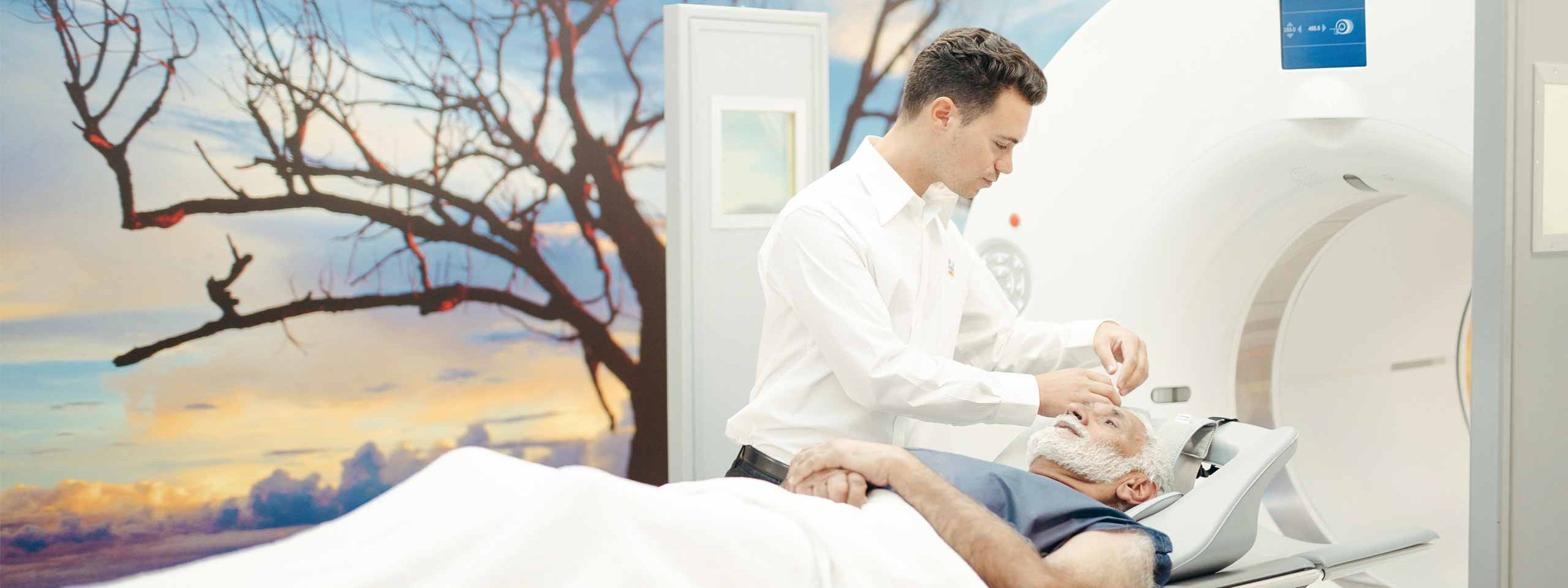
FDG (fluorodeoxyglucose) PET/CT is one of the most widely used imaging procedures in modern medicine. It combines functional and anatomical imaging in a single examination, providing critical information for diagnosing, staging, monitoring treatment response, and restaging a broad range of conditions.
How It Works
FDG is a radioactive form of glucose. Because metabolically active cells – including cancer cells and areas of active infection – consume glucose at a higher rate than surrounding tissue, the tracer accumulates in these areas, making them visible on the scan. The PET component detects the tracer distribution, while the CT provides anatomical detail, allowing precise localisation of abnormal activity throughout the body.
Clinical Applications
Oncology
FDG PET/CT is used across a wide spectrum of cancers, for example:
- Lung cancer – staging, treatment response and restaging
- Lymphoma – initial staging and monitoring chemotherapy response
- Colorectal cancer – detection of recurrence and metastatic disease
- Breast cancer – staging and treatment response assessment
- Melanoma – nodal and distant metastasis detection
- Head and neck cancers – staging and post-treatment assessment
- Oesophageal and gastric cancers – staging and restaging
- Unknown primary – identifying the source of metastatic disease
- Any FDG avid cancers – staging, treatment response and restaging
Infection and Inflammation
FDG PET/CT is increasingly used in the assessment of complex infections and inflammatory conditions, including:
- Fever of unknown origin – identifying occult infection or malignancy
- Osteomyelitis – detecting bone infection, particularly in the spine or prosthetic joints
- Vascular graft infection – assessing infected surgical implants
- Vasculitis – evaluating large-vessel inflammatory disease
What to Expect
On arrival, a technologist will take you through a brief health questionnaire and check your blood glucose level. A cannula (plastic tube) is placed in a vein in your arm. You will then be taken to your own private room, equipped with a recliner and TV. Here, the FDG tracer is administered.
You will rest in this private uptake room for approximately 1 hour – it is important to remain still and avoid reading or using devices, as muscle activity can affect image quality. The scan takes 10 to 30 minutes depending on the area covered, and most patients remain fully clothed throughout.
Scan Preparation
- 6-hour fast from all food and fluids (including lollies, chewing gum, mints, and flavoured drinks). Water is permitted.
- 500 mL of plain, unflavoured water in the hour before your appointment.
- No strenuous exercise for 24 hours prior.
- Comfortable clothing; avoid jewellery and large metal items.
- Diabetic patients – please contact our team for specific preparation instructions.
Are you ready to make your PET/CT Scan (Positron Emission Tomography) appointment?
Our online booking platform allows you to quickly and easily make an appointment online.